endbugflow software – Advanced Bug Flow Management for Modern Software Quality Assurance
In today’s technology-driven economy, software quality has become a decisive factor for business success. Organizations rely heavily on digital platforms to deliver services, manage operations, and communicate with customers. As software systems grow in size and complexity, the margin for error becomes smaller, while user expectations continue to rise. A single defect can lead to financial loss, reputational damage, or even legal consequences. For this reason, structured and intelligent quality assurance practices are no longer optional. Among the solutions shaping this landscape, endbugflow software has emerged as a critical concept for managing defects efficiently and ensuring reliability across development cycles.
Software development has shifted from long, rigid release schedules to fast-paced, iterative models. Agile and DevOps methodologies emphasize continuous integration, rapid deployment, and constant feedback. While these approaches accelerate innovation, they also introduce new risks. Bugs can propagate quickly if not detected early, and fixing them later in the lifecycle becomes increasingly expensive. This reality has pushed teams to adopt advanced tools and systematic workflows that address defects proactively rather than reactively.
The Growing Complexity of Software Systems
Modern applications are no longer simple, standalone programs. They are ecosystems composed of microservices, cloud infrastructure, APIs, and third-party integrations. Each layer introduces potential points of failure. When a system spans multiple platforms and devices, testing becomes a multidimensional challenge. Developers must account for performance, security, usability, and compatibility simultaneously.
In such environments, defect tracking cannot rely on spreadsheets or fragmented communication. Teams need unified systems that capture issues, assign responsibilities, track progress, and provide insights into root causes. This is where endbugflow software plays a vital role by offering structured processes that align with complex architectures and distributed teams.
Understanding the Concept of Bug Flow Management
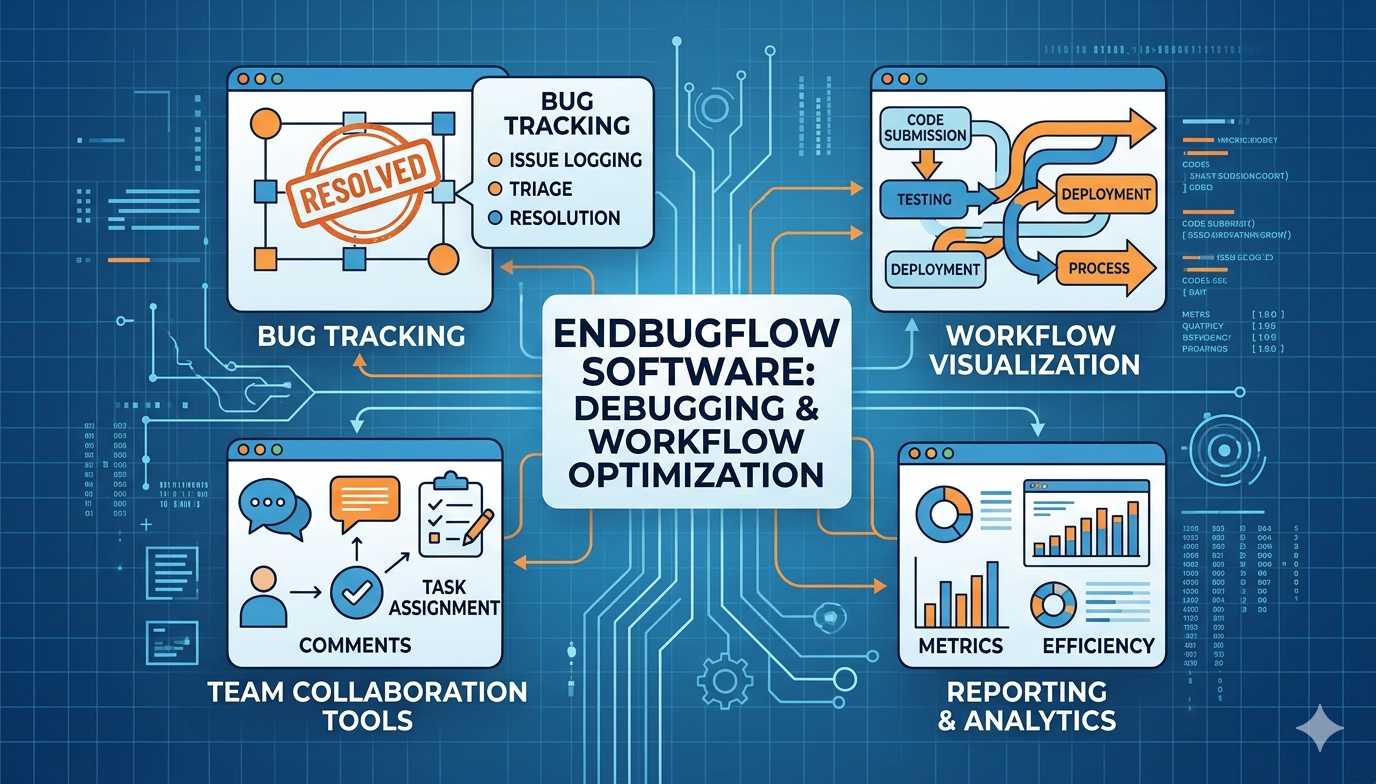
Bug flow management refers to the entire lifecycle of a defect, from discovery to resolution and validation. It includes identification, documentation, prioritization, assignment, fixing, testing, and closure. A well-defined bug flow ensures that no issue is overlooked and that every defect follows a transparent path toward resolution.
Traditional bug tracking tools often focus on logging issues but fail to optimize the overall flow. They may lack integration with development pipelines or provide limited analytics. In contrast, modern approaches emphasize visibility, automation, and collaboration. By centralizing defect data and connecting it with development activities, endbugflow software enables teams to manage bugs as part of a continuous process rather than isolated events.
Integration with Agile and DevOps Practices
Agile and DevOps methodologies prioritize speed, flexibility, and collaboration. However, without proper quality controls, rapid releases can compromise stability. Effective bug flow management supports these methodologies by embedding quality assurance into every sprint and deployment cycle.
In Agile teams, defects are often treated as backlog items that compete with new features for attention. A structured system helps teams prioritize bugs based on severity and business impact. Within DevOps pipelines, automated testing and monitoring generate large volumes of data. Managing this information manually is impractical. Tools designed for comprehensive bug flow can automatically capture, categorize, and route defects to the right teams. As a result, endbugflow software aligns seamlessly with modern development cultures.
Enhancing Collaboration Across Teams
Software development is inherently collaborative. Developers, testers, product managers, and operations staff must work together to deliver reliable products. Miscommunication can lead to duplicated efforts, unresolved issues, or conflicting priorities. A centralized defect management system acts as a single source of truth for all stakeholders.
Clear workflows and standardized terminology reduce ambiguity. When everyone understands the status and ownership of a defect, accountability improves. Visual dashboards and real-time notifications further enhance transparency. By fostering shared understanding, endbugflow software strengthens collaboration and reduces friction between teams with different responsibilities.
Data-Driven Quality Improvement
One of the most powerful advantages of modern quality tools lies in their ability to generate actionable insights. Every defect carries valuable information about the system and the development process. Patterns in bug reports can reveal recurring weaknesses, skill gaps, or architectural flaws.
Analytics derived from defect data help organizations move from reactive fixes to proactive improvement. Metrics such as defect density, resolution time, and recurrence rates inform strategic decisions. Over time, these insights contribute to higher code quality and more predictable releases. Leveraging such data effectively is a defining characteristic of endbugflow software.

Risk Reduction and Cost Efficiency
Fixing bugs early is significantly cheaper than addressing them after deployment. Studies consistently show that the cost of defect resolution increases exponentially as a project progresses. Beyond direct development costs, post-release bugs can disrupt operations, trigger customer complaints, and require emergency patches. how endbugflow software can be protected
A structured bug flow minimizes these risks by ensuring timely detection and resolution. Automated alerts and prioritization mechanisms prevent critical issues from being buried under minor ones. By reducing rework and downtime, endbugflow software contributes directly to cost efficiency and operational stability.
Supporting Regulatory and Compliance Requirements
In many industries, software must comply with strict regulatory standards. Healthcare, finance, and public services require traceability, documentation, and auditability. Defects must be tracked not only for quality reasons but also for compliance reporting.
A robust defect management system provides detailed histories of every issue, including who reported it, how it was resolved, and when it was verified. This level of documentation supports audits and reduces compliance risks. Organizations operating in regulated environments increasingly rely on endbugflow software to meet these obligations without slowing down development.
Scalability for Growing Organizations
As organizations grow, their software ecosystems expand. What works for a small team may not scale to dozens of projects and hundreds of contributors. Scalable quality assurance tools adapt to increasing complexity without sacrificing usability.
Features such as role-based access, customizable workflows, and integration with enterprise systems become essential. A scalable approach ensures that quality standards remain consistent across departments and regions. For global teams, including those operating in the United Kingdom, scalable defect management supports coordination across time zones and cultural contexts. In this regard, endbugflow software provides the flexibility needed for sustainable growth.
Improving Customer Satisfaction and Trust
End users rarely see the internal processes behind software development. They judge quality based on performance, reliability, and user experience. Frequent crashes, glitches, or security issues erode trust and drive customers away.
By streamlining defect resolution, organizations deliver more stable and polished products. Faster response times to reported issues demonstrate commitment to user satisfaction. Over time, consistent quality builds brand loyalty and competitive advantage. The structured approach offered by endbugflow software directly influences how customers perceive a product and the organization behind it.
The Role of Automation and Artificial Intelligence
Automation has transformed many aspects of software testing, from unit tests to performance monitoring. Artificial intelligence further enhances defect management by identifying patterns and predicting potential issues. Machine learning models can analyze historical data to anticipate where bugs are likely to occur.
Automated triage systems reduce manual effort by categorizing and prioritizing defects based on predefined criteria. This allows human experts to focus on complex problem-solving rather than administrative tasks. As these technologies mature, endbugflow software increasingly incorporates intelligent features that elevate quality assurance to a strategic function.
Cultural Impact on Quality Practices
Tools alone cannot guarantee quality. Organizational culture plays a crucial role in how effectively defect management systems are used. A culture that values transparency, learning, and continuous improvement encourages teams to report issues early and address them collaboratively.
When defects are treated as opportunities for improvement rather than sources of blame, teams become more proactive. Clear workflows and shared metrics reinforce this mindset. By supporting positive quality cultures, endbugflow software helps organizations embed excellence into their daily practices.
Future Trends in Software Quality Management
The future of software quality lies in deeper integration, smarter analytics, and greater automation. As systems become more interconnected, defect management must extend beyond individual applications to entire ecosystems. Security vulnerabilities, performance bottlenecks, and user experience issues will be managed holistically.
Cloud-native platforms and remote collaboration tools will continue to shape how teams work. In this evolving landscape, adaptable and intelligent quality solutions will be essential. Organizations that invest in comprehensive bug flow management today position themselves for resilience and innovation tomorrow. At the center of this evolution stands endbugflow software, representing a forward-looking approach to software quality in an increasingly complex digital world.
Conclusion
Software quality assurance has evolved from a supporting function to a strategic priority. As digital systems underpin critical business processes, the ability to manage defects efficiently determines reliability, trust, and long-term success endbugflow software. Structured bug flow management aligns development speed with stability, enabling organizations to innovate without compromising quality.
By integrating with modern methodologies, enhancing collaboration, leveraging data, and supporting scalability, advanced defect management solutions redefine how teams approach quality. In a world where software excellence is non-negotiable, adopting comprehensive practices ensures that organizations remain competitive, compliant, and customer-focused well into the future.